Long before the followers of Jesus were called “Christians,” they were known by another name: Followers of the Way. That phrase appears in the Book of Acts, where early believers were identified not by a denomination, a political affiliation, or a religious institution, but by the way they lived. The Way was not merely a system of beliefs. It was a path. A manner of walking through the world. A daily expression of love, mercy, courage, humility, and transformation.
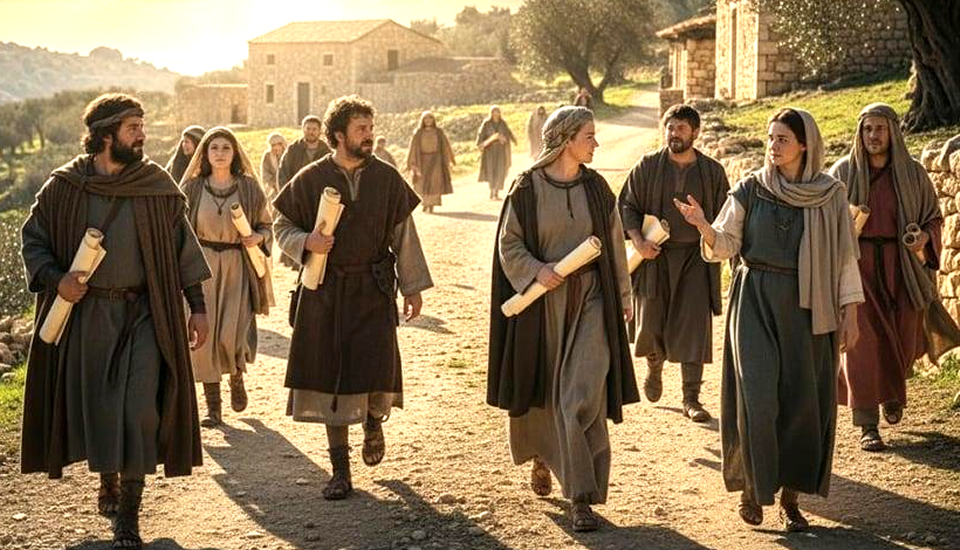
In many ways, I think we have lost something precious by letting that language fade into history.
Because “Christian” can sometimes become a label people wear without deeply considering what it means. But “Follower of the Way” feels different. It implies movement. Intention. Participation. It asks something of us. It suggests that faith is not merely intellectual agreement, but an ongoing journey of becoming.
Jesus never simply invited people to adopt a doctrine. He invited them to follow Him.
And following Jesus has always been far more than attending services, memorizing verses, or defending theological positions online. The Way of Jesus is not about appearing spiritually superior. It is about becoming more loving.
That changes everything.
The Way asks us to love people who are difficult to love. It asks us to forgive when our pride wants revenge. It asks us to remain gentle in a world that rewards outrage and self-promotion. It asks us to tell the truth compassionately, to help quietly, to serve without applause, and to walk humbly with God and with one another. That is not weakness. That is spiritual maturity.
Jesus demonstrated this repeatedly. He sat with the rejected. He defended the condemned. He touched the untouchable. He crossed social, cultural, political, and religious boundaries to reach people where they were. Again and again, He chose mercy over performance, compassion over condemnation, relationship over religious theater.
The deeper I study the life of Jesus, the more I realize that His greatest message was not fear. It was love. Not shallow sentimental love. Not permissive love. But transformative love. The kind of love that changes how you treat strangers.
How you speak to your spouse.
How you handle betrayal.
How you respond to weakness.
How you see yourself when you fail.
Followers of the Way understood this. They were not perfect people. Far from it. They struggled, stumbled, argued, doubted, and failed many times. But they kept returning to the path. They kept orienting themselves toward Jesus and His example. That may be one of the most important lessons for us today.
The Way is not about getting everything right all the time. It is about remaining willing to walk toward the light, even after we stumble in darkness.
Some days that walk feels strong and purposeful. Other days it feels uncertain and exhausting. Sometimes faith feels vibrant. Sometimes it feels quiet and fragile. But the invitation remains the same:
-
- Keep walking.
- Keep loving.
- Keep forgiving.
- Keep growing.
- Keep choosing mercy.
- Keep becoming more like Christ in the way you live, not merely in the way you speak.
One of the great tragedies of modern culture is that many people now associate Christianity more with conflict than compassion. More with judgment than healing. More with argument than understanding. Yet when people encountered Jesus directly, they often felt seen, loved, comforted, challenged, and transformed. That should tell us something important.
If we truly claim to follow the Way of Jesus, then love cannot merely be part of our message. It must become our manner of being. Not performative kindness for public approval. Real love. The kind that costs something. The kind that remains patient when frustrated. The kind that listens instead of immediately condemning. The kind that seeks restoration rather than humiliation.
The early Followers of the Way were recognizable because something about them felt different. There was a steadiness in them. A peace. A generosity. A willingness to suffer for what was right without becoming cruel themselves.
Imagine what would happen if modern believers became known for that again.
Not for winning arguments.
Not for political domination.
Not for public outrage.
But for radical compassion.
Deep integrity.
Courageous humility.
And the unmistakable love of Jesus.
Perhaps that is the invitation before us now. Not merely to identify as Christians, but to rediscover what it means to truly walk in the Way. To wake each morning and quietly ask:
Am I walking in love today?
Am I becoming more compassionate today?
Am I treating others the way Jesus treated people?
Am I helping heal the world around me, or contributing to its division?
Am I walking in the Way?
Because at the end of the day, faith is not proven merely by what we claim to believe. It is revealed by how we live.
And every act of kindness, every extension of grace, every moment of forgiveness, every choice toward humility, mercy, truth, healing, and compassion becomes another step along that ancient path once walked by the earliest Followers of the Way.
May we walk it well.